
What I Wish I Knew Before My First IEP Meeting
A practical, honest guide to walking into school meetings as the expert on your own child, without burning bridges.
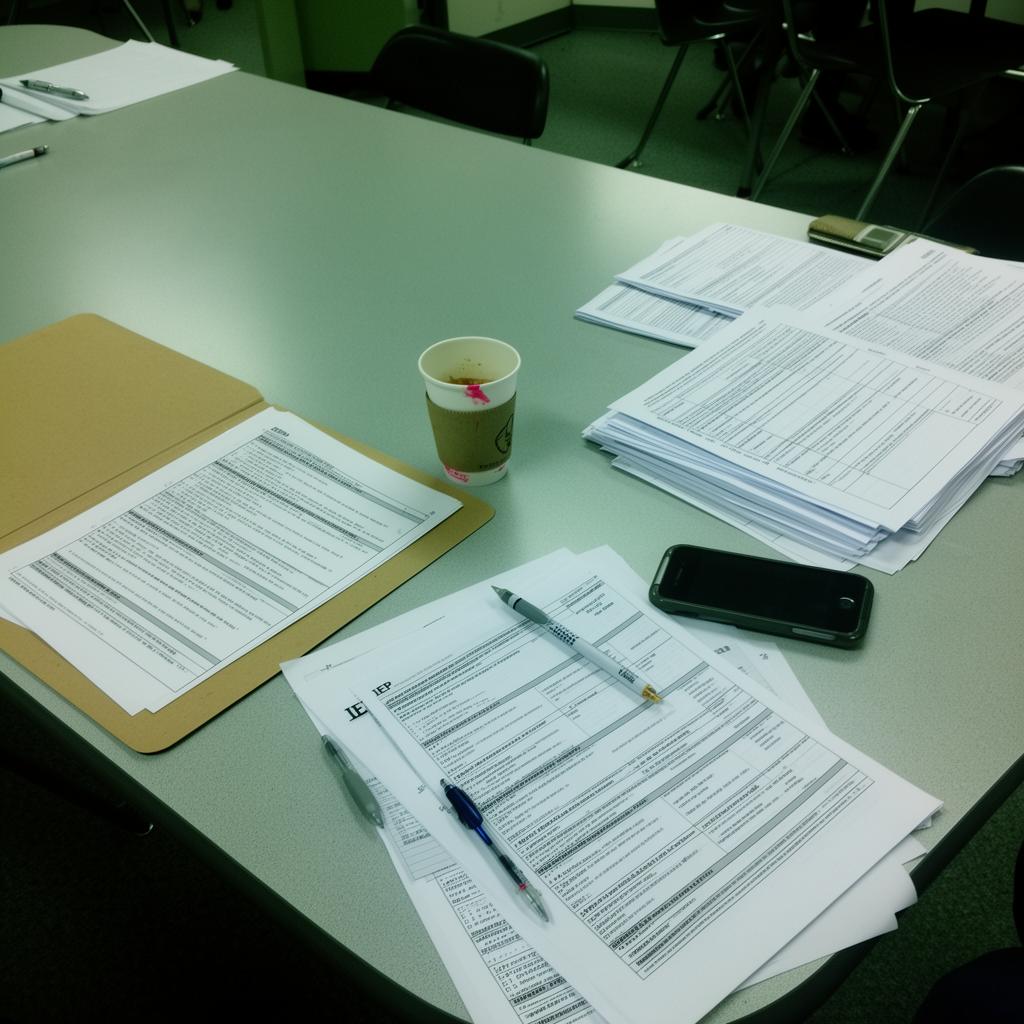
Nobody warns you that your first IEP, ILP, support plan, or whatever your local system calls it, can feel like a job interview where you don't know the job, the questions, or who's actually hiring. You walk into a room with four to seven professionals, most of whom you've never met, all holding folders about your child, and you're handed a chair and a weak cup of tea.
Here is what I wish someone had told me before mine: you are not the junior person in that room. You are the only person who has known your child their entire life, across every setting, on their best days and their worst. Everyone else around the table is contributing a slice of expertise, a single class period, a single assessment, a single specialism. You are contributing the whole picture. Walk in with that posture, warmly, and the dynamic shifts.
A few practical things that change the shape of the meeting before it even starts.
Bring a written one-pager about your child. Strengths first. Then what's hard. Then what helps and what backfires. Then a short paragraph on what a good day looks like and what a hard day looks like. Hand it out at the start of the meeting, on paper, one each. It does three things at once: it re-centres the meeting around your child as a person rather than a list of deficits, it gives shy professionals something concrete to refer back to, and it quietly tells the room that you came prepared.
Ask for the agenda in advance. Ask who will be there and in what role. Ask for any reports, assessments, or draft documents to be sent to you at least 48 hours before the meeting, so you have time to read them properly at your kitchen table, not skim them under fluorescent lights with five people watching your face. If they say it's not possible, ask why. Often it is possible, it's just not the default.
Bring a second person if you can. Not necessarily to speak. Often just to take notes, to make eye contact with you when something lands badly, and to remember the bits you'll forget because your nervous system is busy. A partner, a friend, a grandparent, an advocate, anyone you trust. If you can't bring someone, ask permission to record the meeting, or take your own notes openly.
Know what you're actually asking for. "He needs more support" is hard to action. "He needs movement breaks every 25 minutes and a quiet space he can go to without asking permission" is something the room can say yes or no to. Specific asks get specific answers. Vague asks get vague reassurance.
When you disagree, you can disagree warmly. The single most useful sentence I've learned is some version of: "Help me understand how that recommendation will support [the specific thing my child actually needs]." It's much more effective than "I don't agree," because it invites the other person to do the thinking with you instead of defending their position. If their answer is good, great, you learn something. If their answer is thin, the thinness is now visible to everyone in the room, without you having to be the one who pointed it out.
Watch for the moments where the conversation drifts into compliance language, things like "he needs to learn to," or "she has to be able to." Those sentences are often where accommodations quietly get traded for expectations. It's worth pausing and asking what support is being offered alongside the expectation. An expectation without support is just pressure.
Take the offered plan home before you sign anything. You are almost always allowed to do this, even when the room implies you're not. "I'd like to take this home, read it carefully, and come back with any questions by Friday" is a complete sentence. A plan you sign in the moment to be polite is a plan you may spend the next twelve months trying to undo.
And the part about not burning bridges: you are likely going to be working with this school for years. The teaching assistant in the room today may be your child's strongest ally in two years' time. The head of learning support may be the person who quietly bends a rule for you next term. The goal is not to win the meeting. The goal is to leave with a plan that actually supports your child and a relationship that can carry the next twelve months of small adjustments, conversations in corridors, and emails that need a quick yes.
If you leave the meeting and cry in the car, that's normal. If you leave feeling fierce, that's normal too. Both are signs you care. Send a short, warm follow-up email within 48 hours summarising what was agreed and what the next steps are. Put it in writing. Keep the tone collaborative. You're building a paper trail and a working relationship at the same time, and the two are not in conflict.
If you'd like a hand preparing for a specific upcoming meeting, that's exactly what the Advocacy side of MYTI exists for.